In German data center projects the cable routing stage from design to acceptance directly affects network reliability and compliance. This article focuses on "Precautions and Quality Control Points for Network Cable Routing in German Data Centers from Design to Acceptance," covering key points such as standard basis, material selection, laying specifications, joint handling, testing and acceptance, and document management, making it easier for project teams to implement quality control and risk management at every stage.
During the design phase, topology, capacity, and redundancy strategies should be determined based on international and German local standards (such as ISO/IEC 11801, EN 50173, and relevant DIN/VDE standards). Reasonably divide data center areas, distribution rooms, and fiber backbone routes, clearly define power and weak current zones, reserve future expansion space and cooling needs, and ensure the design meets usability and compliance requirements.
Select appropriate copper cable and fiber models (such as Cat6A/Cat6, OM3/OM4, or single-mode OS2), and prioritize the use of low smoke halogen-free (LSZH) outer sheaths to meet building fire protection requirements. Materials must have complete inspection reports and certificates of conformity. Optical fibers should be selected to be suitable for short- or long-span equipment rooms, and wiring accessories should consider durability and ease of maintenance.
During installation, the load of cable trays is controlled, layered arrangement is implemented, and the use of cable management frames and cable trays to ensure even bending radius and even force distribution. Avoid parallel laying with high-voltage cables, follow the manufacturer's bending radius and installation temperature requirements, use cable ties or cable trays for management, clearly label and reserve maintenance channels and expansion space.
Terminations are high-risk fault areas; copper cables must ensure the wiring diagram and sequence are correct and properly protected; The fiber end faces must be cleaned, polished to meet standards, and dustproof covers must be used. Terminal boxes and patch panels must be securely installed, with no stress concentration or sharp bending at joints. If necessary, tensile tests and end face inspections should be added as quality criteria.
Acceptance must include comprehensive testing: copper cables must complete testing of trace sequence, attenuation, NEXT, ACR, and return loss; Fiber optics are tested for insertion loss, return loss, and OTDR link detection. Test results should be consistent with design specifications and product standards. Nonconformities must be recorded, reworked, and retested before acceptance documents can be signed.
Comprehensive documentation is beneficial for later maintenance and fault localization. End-to-end as-built drawings, wiring lists, test reports, and equipment lists should be provided, with unified labeling rules and consistency across cabinets, panels, and drawings. Changes must be recorded and managed through engineering changes to ensure long-term traceability of information.
Construction in Germany also requires attention to building and fire safety regulations, electrical safety and environmental control requirements. The design and construction of the computer room must comply with local fire safety and building regulatory standards, ensuring fire compartments, escape routes, and ventilation and cooling meet regulations, and implement safety management measures for personnel and equipment.
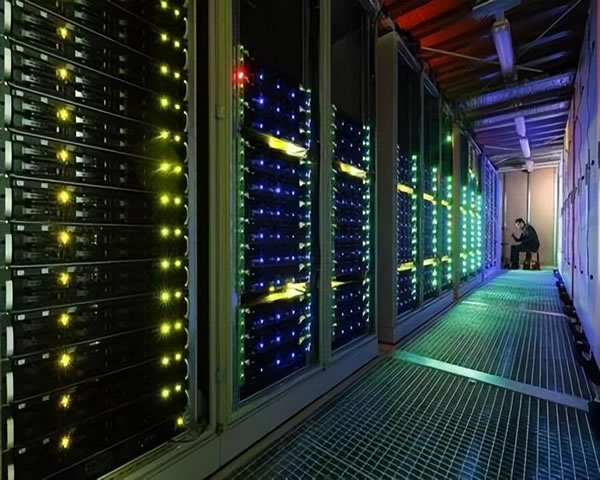
Summary and Suggestions: In the "Considerations and Quality Control Points for Network Cable Routing in German Data Centers from Design to Acceptance," strictly following standards, selecting materials reasonably, laying conventionally, emphasizing termination and testing, improving documentation, and adhering to local regulations are the core to ensuring the reliability and maintainability of data center networks. It is recommended to establish standardized processes and acceptance checklists, implement third-party testing and periodic inspections, and ensure delivery quality and long-term stable operation.
- Latest articles
- Identifying And Tracing Techniques For Hong Kong Native IP Ranges And ISP Ownership
- Technical Interpretation: Analysis Of Network Latency And Stability Of Viomi Technology's US Servers
- From Design To Acceptance, Precautions And Quality Control Points For Network Cable Routing In German Data Centers
- Enterprise-Level Deployment Guide Taiwan Server Bidirectional CN2 Cloud Host Network Redundancy Design Key Points
- Practical Operations And Maintenance: Precautions For Deploying Applications Online On A 120-200 US Private VPS
- Fast Listing And Shipping Process Optimization: Operational Guidelines For Malaysia Server Sourcing
- Enterprise Procurement Strategies Help Address The High Cost Of Taiwan Server Negotiations And Procurement Techniques
- E-commerce Companies Choosing Shanghai-Hong Kong Server Hosting As A Practical Strategy To Enhance User Experience
- How To Evaluate The Provider's Line Stability When Choosing A Hong Kong CN2 Cloud Host
- Interpretation Of The Impact Of Hong Kong Native IP Segments On Cross-Border Advertising Targeting And Regional Rules
- Popular tags
-

Analysis Of Key Inspection Dimensions In German Independent Server Hosting Service Provider Comparison Table
the system analyzes the key inspection dimensions in the german independent server hosting service provider comparison table, including connectivity, data center location, hardware performance, security compliance, sla and support, etc., to help enterprises make wise choices. -

How Does The Design Concept Of German Motor Room Affect The Performance Of The Computer Room?
Explore how the design concept of German motor room affects the performance of the computer room, and pay attention to design principles, environmental factors and technical applications. -

Security And Data Protection Measures For German Server Hosting
Discuss the security and data protection measures of German server hosting to help enterprises understand how to ensure the security of data.